The Hidden Culture Killer
Welcome to another Toolkit Tuesday! Every week, our goal is to give you a practical leadership tool to put in your toolkit.
So There I Was . . .
So there I was, in a session with a leadership team that’s been running a solid business for over 20 years. They were walking me through a new system they were getting ready to roll out. You could tell there was real excitement. It was going to reduce errors, create efficiency and deliver a better product.
Then one of the leaders started sharing about a conversation they had with one of their people. Someone who had been there since the very beginning. Loyal. Trusted. Knew the business inside and out.
But as they told the story, you could hear the frustration. They had tried to explain the new system and why it mattered. But almost immediately, they hit resistance.
“We don’t need this.”
“I’ve been doing this for 20 years.”
“I can do it just as good the old way.”
This wasn’t a one time conversation. It had been building. What started as excitement about the future had turned into frustration about one person holding things up.
And sitting there listening, it was clear. This wasn’t a systems problem. This was a leadership standard problem.
The Challenge
Most leaders don’t struggle to recognize resistance. They struggle with what to do about it. Because now it’s not just about performance. It’s about loyalty. History. Relationships. And for many leaders, it feels easier to work around the problem than address it directly.
So they avoid the conversation. They isolate the person. They tell themselves it’s manageable. But resistance never stays contained.
It spreads into conversations, into attitudes and eventually into the culture. What started as one person’s mindset begins to shape how the team responds to challenge.
The Tool: The Responsive Person
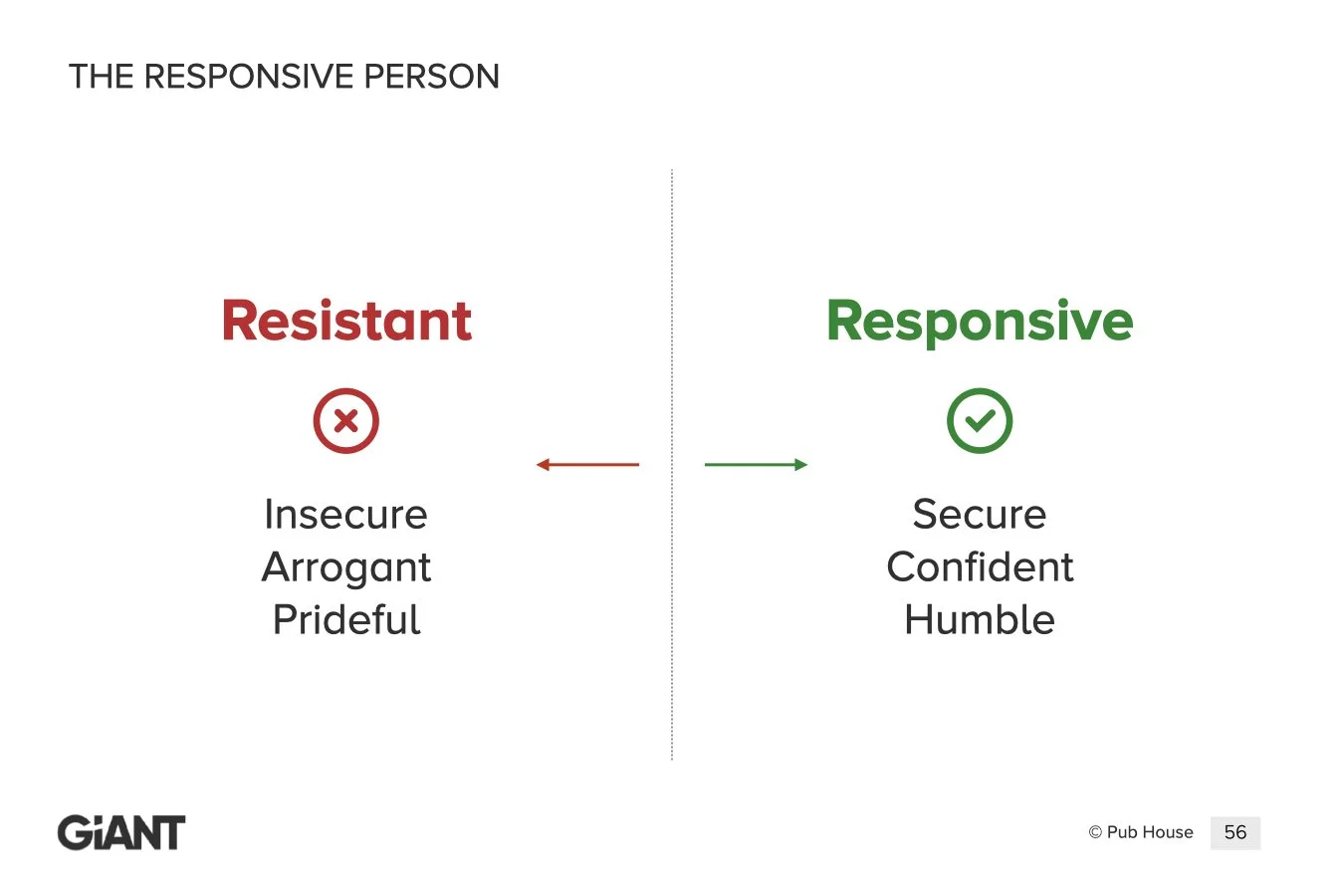
The goal here isn’t to label other people. It’s to create a standard, starting with yourself.
Before you ever address this in someone else, you have to look in the mirror. When you’re challenged, how do you respond? Do you listen and consider it, or do you defend, deflect or try to prove your point?
A responsive leader doesn’t see challenge as a threat. They see it as input. They can hear feedback without getting defensive, own mistakes without deflecting and take what’s useful and act on it. That doesn’t make them weak. It builds trust and influence.
Once you’ve done that work yourself, then you can use this tool with your team. Set the expectation clearly. This is how we operate. This is how we handle feedback. This is how we respond to challenge.
Then reinforce it. Call it out when you see responsiveness and address it when you see resistance. Over time, you’re not just correcting behavior. You’re shaping the culture.
Why This Matters Now
Every team says they want to grow. But growth requires change. And change requires people who are willing to be challenged.
If resistance is tolerated, progress slows. Communication gets harder. Trust starts to erode. But when responsiveness becomes the standard, everything shifts.
People take ownership. Conversations get healthier. Teams move faster because they’re not spending energy protecting themselves.
The difference is not talent. It’s mindset.
The Result
If you reinforce responsiveness, you build a team that can handle growth.
People adapt. They learn. They support and challenge each other. Performance improves because the environment allows it to.
If you don’t, resistance multiplies.
Others start to mirror it. Standards get blurry. Leaders spend more time managing behavior than driving results.
And eventually, the business hits a ceiling that has nothing to do with strategy and everything to do with culture.
Take Action
First, identify one place where resistance is showing up on your team. Start with yourself, then address it directly and clearly define what a responsive standard looks like moving forward.
Second, if you want help building a culture where responsiveness becomes the norm, schedule a call and let’s work through it together.
Closing the Loop
That system they were rolling out wasn’t the hard part.
The real challenge was deciding what kind of leadership they were willing to allow.
Because every team becomes a reflection of what the leader tolerates.
Responsive or resistant. That choice shows up every day.