If We Asked Your Team, Would They Agree?
Welcome to another Toolkit Tuesday! Every week, our goal is to give you a practical leadership tool to put in your toolkit.
So There I Was . . .
So there I was, coming off two decades of military special operations and serving on two high functioning ministry teams, reading through a tool called Role Clarity and quietly questioning why it even existed.
In the environments I came from, clarity was assumed. In the military, if you did not know your job, someone fixed that quickly. Roles were defined. Accountability was normal. Winning was clear.
And in ministry, I had a leader who came from a very successful corporate career. He took the time to make sure everyone had clarity about their role and about each other’s roles. There was no guessing. No overlap drama. No silent confusion.
Then I thought about the movie Office Space. Peter sitting across from the consultants, explaining that he has eight bosses and barely knows what he actually does. It is satire.
But I have walked into organizations where no one can clearly articulate who owns what, what winning looks like or even who they ultimately report to. That is not a comedy.
That is what happens when leaders assume clarity instead of creating it.
The Challenge
Most leaders believe their team members know their role. They assume people understand what they are responsible for and what winning looks like. They assume reporting lines are obvious.
But assumptions are not clarity.
When roles are fuzzy, accountability feels unfair. People get corrected for things they did not know were theirs. Work falls between the cracks. High performers quietly carry more than they should while others operate in the gray. Frustration builds, not because people are incapable, but because the system is unclear.
The Tool: Role Clarity
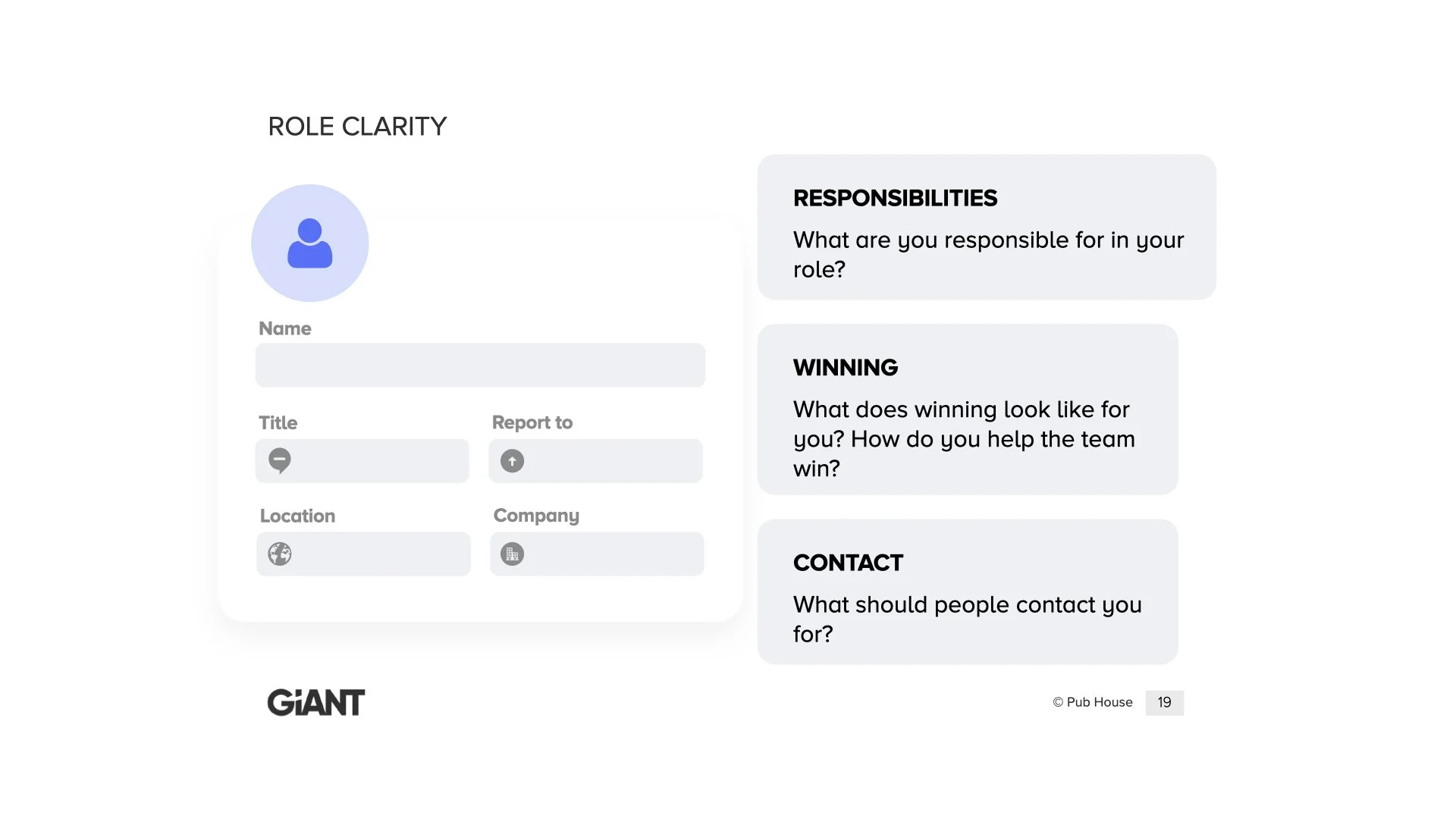
The Role Clarity tool forces a simple but powerful conversation. This is not an HR job description that sits in a file somewhere. It is a leadership conversation about real ownership.
First, define the basics. What is the person’s role? What is their title? Who do they directly report to? No ambiguity.
Next, clearly state their key responsibilities. Not a vague job description, but specific ownership. What is actually theirs?
Then define what winning looks like. How do they know they are succeeding? What outcomes matter most?
After that, connect their role to the bigger picture. How does their work help the team win? How does it move the organization forward?
Finally, clarify what others can come to them for. Where is their expertise? What lane do they own?
It is not complicated. But it is intentional.
Why This Matters Now
Teams are moving fast. Roles evolve, expectations shift and what was clear a year ago often is not clear today. When leaders do not regularly define and redefine ownership, confusion quietly creeps in.
Without defined roles, accountability conversations turn emotional instead of objective. Instead of asking, “Did you hit the standard?” we end up debating, “Was that even my job?” Clarity changes that. When expectations are agreed upon upfront, feedback feels fair and ownership feels real.
Clarity reduces drama, increases trust and gives people something they deeply want. To know exactly what they are responsible for and to know their work actually matters.
The Result
If you take the time to create real role clarity, you will feel the shift quickly. Meetings become more focused. Decisions move faster. People stop circling the same issues because ownership is clear. Energy that used to go toward confusion now goes toward progress.
If you do not address it, the cracks widen. High performers carry more than they should and eventually burn out. Others disengage because they are unsure what they truly own. Leaders spend more time managing tension than driving results.
That is not a talent issue. It is not a motivation issue. It is a clarity issue. And clarity is the leader’s responsibility.
Take Action
Choose one key person on your team and walk through the Role Clarity conversation this week. Define their responsibilities, what winning looks like and how their role helps the team win. Make it specific enough that there is no debate later.
If you want help building role clarity across your entire leadership team, schedule a callwith us. We will help you identify where confusion exists and create the structure your team needs to operate with real ownership.
Closing the Loop
When I first saw the Role Clarity tool, I thought it was unnecessary. In the environments I came from, clarity felt like common sense.
But after working with businesses across industries, I have yet to find one that does not struggle with role clarity at some level. It is not a one and done conversation. As organizations grow, shift and evolve, roles shift with them. What was clear twelve months ago may not be clear today. At a minimum, this needs to be revisited once a year. If your business is moving fast, twice.
If you do not define and regularly redefine roles, confusion slowly creeps back in. Leadership is not about assuming people know their job. It is about taking responsibility to make sure they do.
Because when people know their role, know the win and know why it matters, they show up differently.