I Thought I Was Just Carrying Bags
Welcome to another Toolkit Tuesday! Every week, our goal is to give you a practical leadership tool to put in your toolkit.
So There I Was . . .
Still pretty new to a special operations unit, trying to figure out where I fit and how to keep up.
Our commander pulled me aside one day and told me I’d be joining him and a senior pilot for a planning session out in the middle of Nevada. I remember thinking, “Alright, I guess I’m carrying bags for a few days.” That felt about right for where I was at the time.
What I didn’t realize was that nothing about that trip was random.
For five days, I followed them everywhere. Planning rooms, briefings, side conversations. I was listening, asking questions, getting asked questions back, and then sitting with them at the end of the day as they unpacked everything over a beer. It was a firehose. Not just the technical and tactical parts of the job, but the strategic and logistical thinking behind it. The stuff you don’t see unless someone chooses to show you.
At some point during that trip, it clicked. They weren’t just doing their job. They were intentionally bringing me into it. They were transferring how they thought, how they planned, how they led.
The Challenge
Most leaders say they want to develop people, but in reality, we hope it just happens.
We assume people will pick things up by watching. We expect them to think like we think without ever explaining how we got there. And when they fall short, we get frustrated instead of realizing we never made the investment clear.
Growth doesn’t happen by proximity. It happens through intentional transfer.
Without a plan, development becomes inconsistent. Expectations get unclear. And over time, you become the bottleneck to your own team’s growth.
The Tool: Multiplying Magic
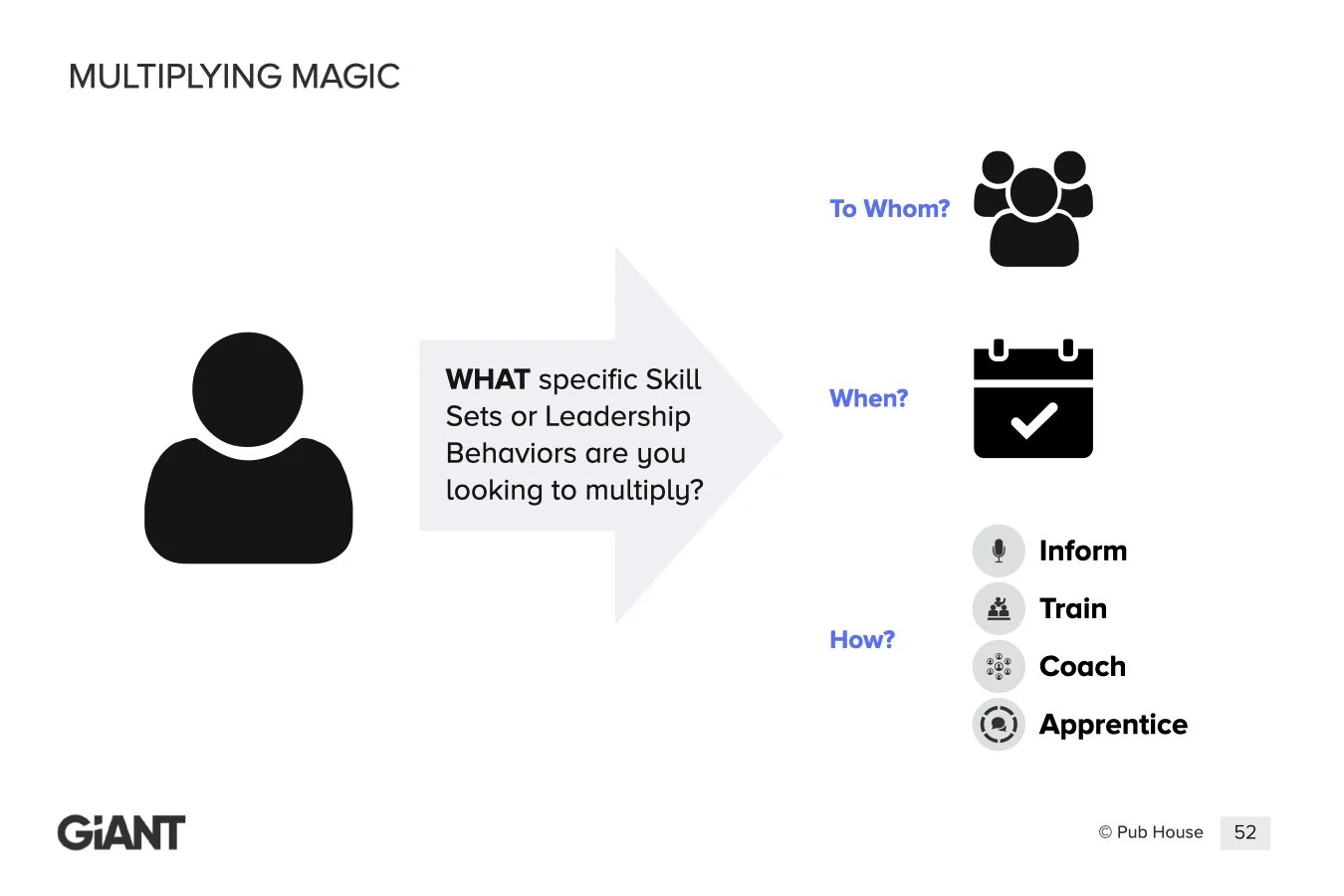
Multiplying Magic is about intentionally transferring what makes you effective into someone else.
It forces you to think through four key components:
WHAT: What specific skill, mindset, or capability are you trying to pass on.
WHO: Who is receiving that investment and do they know it
WHEN: What is the timeline and what does readiness actually look like
HOW: How will you transfer it through informing, training, coaching, and apprenticeship
This isn’t accidental. It’s a plan.
Because if you’re not clear in these four areas, you’re not multiplying anything. You’re just hoping it sticks.
Why This Matters Now
Teams don’t struggle because of a lack of talent. They struggle because of a lack of clarity and intentional development.
If people don’t know what they’re being developed in, or if leaders don’t have a clear plan to transfer their knowledge, frustration builds quickly. Expectations get missed. Culture takes a hit.
But when you get this right, everything changes.
You create alignment. You build confidence. And you unlock a level of performance that doesn’t rely on you being in every conversation.
The Result
When you commit to multiplying your magic, your team starts to grow beyond you.
People begin to think more clearly. They take ownership. They step into responsibilities you used to carry.
If you don’t, the opposite happens.
You stay in the middle of everything. Decisions slow down. Frustration builds on both sides. And the growth you say you want never actually shows up.
Multiplication isn’t optional if you want to scale your leadership.
Take Action
First, identify one skill or mindset you currently carry that your team depends on too much. Then write out your plan using What, Who, When, and How. Be specific and honest about where the gaps are.
Second, if you want help building a more intentional development plan for your team, let’s talk. This is one of the fastest ways to unlock growth and reduce unnecessary friction.
Closing the Loop
Looking back, that week in Nevada wasn’t just a training trip. It was intentional. They weren’t just getting through a planning session. They were making sure what they knew didn’t stay with them.
Because of that investment, I went on to lead over a hundred combat missions in Afghanistan. And more importantly, I had the responsibility to do the same for others who came behind me.
In that unit, everyone knew they would eventually leave. The only way to do your job well was to build someone who could replace you. That’s what it means to multiply your magic.