Is Your Training Actually Changing Behavior?
Welcome to another Toolkit Tuesday! Every week, our goal is to give you a practical leadership tool to put in your toolkit.
So There I Was . . .
A senior leader I was working with pulled me aside one day and shared a frustration. He could not figure out why his sales managers were not coaching their teams more.
What made the situation interesting was that I had spent enough time with him to see how he personally led. He regularly stepped onto the sales floor, sat with junior salespeople, helped them think through problems and coached them through situations in real time. He was excellent at it.
But his managers were not doing the same thing.
So I asked him a simple question. “The next time you go coach someone, grab one of your managers and say, ‘Come with me and watch this.’”
He paused for a moment and said he had never thought about doing that.
Then he gave a very honest answer about why. He said if he pulled one of his managers away from the sales desk it would create a gap at the sales desk during that short time.
The Challenge
Most leaders want their people to grow. But they also feel the pressure of keeping the operation moving.
It is often faster and easier to just handle the moment yourself than to slow down and bring someone alongside you. Teaching in real time takes patience. It takes energy. And sometimes it creates short term gaps while you step away from the work.
It reminds me of something most parents have experienced.
Is it easier to cook breakfast for your kids or to bring them into the kitchen and let them help?
The first option is quicker. The second option takes longer and usually creates a mess. But if your goal is their growth, not just efficiency, you invite them into the process.
Leadership development works the same way.
The Tool: Effective Learning
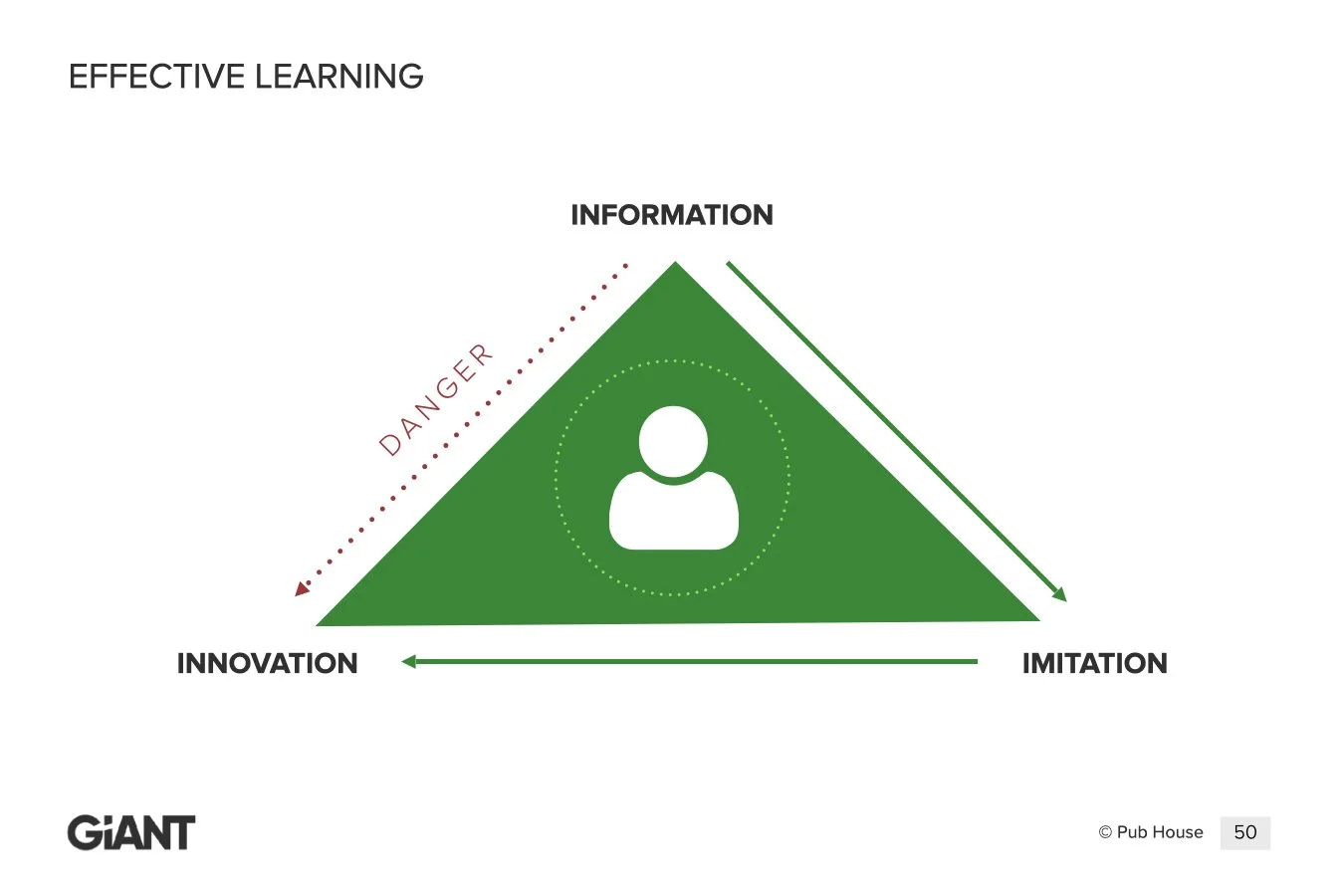
If you want people to truly grow as leaders, learning usually happens in three stages.
Information - People need to understand the concept. This is where teaching happens. Ideas, principles and frameworks are explained so people know what good leadership looks like.
Imitation - People need the opportunity to observe how that information is actually applied. This means inviting them into real leadership moments so they can watch how decisions are made, how conversations are handled and how problems are solved.
Innovation - Once someone understands the information and has seen it practiced, they can begin adapting the skill and making it their own.
The mistake many leaders make is skipping the middle step. We give people information and then expect them to innovate.
Without imitation, most people are left guessing.
Why This Matters Now
Leaders today have more access to information than ever before. Books. Podcasts. Courses. Conferences. But access to information does not automatically create better leadership.
What multiplies leadership capacity is proximity. It is the chance to observe how experienced leaders think, communicate and handle real situations.
That kind of learning transfers more than knowledge. It transfers instincts, judgment and leadership DNA.
The Result
When leaders intentionally create opportunities for imitation, development accelerates.
People begin to see the nuance behind decisions. They watch how difficult conversations are handled. They observe how problems are approached and solved. Over time they gain the confidence to step into those moments themselves and eventually innovate on what they have learned.
But if imitation never happens, most leaders will continue trying to figure things out on their own. Some will succeed. Many will struggle. And the growth of the team will be slower than it needs to be.
Take Action
This week, invite someone into a leadership moment you would normally handle alone. Bring them into a meeting, a problem solving conversation or a coaching moment. Afterwards, walk them through what you were thinking and why you handled it the way you did.
If you want help building a leadership development process that actually multiplies leaders instead of just transferring information, schedule a call with us. We would be glad to help you design a more intentional approach for your team.
Closing the Loop
That leader I mentioned earlier realized something simple.
His managers were not ignoring coaching. They had just never seen it done up close.
Once he began bringing them alongside him and letting them observe those moments, things started to change. Because sometimes the most powerful way to develop a leader is not giving them more information.
It is letting them see leadership in action.