Who Is Leadership Development Really For?
Welcome to another Toolkit Tuesday! Every week, our goal is to give you a practical leadership tool to put in your toolkit.
So There I Was . . .
I was catching up with a friend of mine over a cup of coffee during our Christmas break. He’s a senior level manager, and as we talked, he shared something that’s stuck with me.
His company had sent him away to a leadership offsite. Three full days. Eight hours a day. On site. Tens of thousands of dollars invested. Tons of inspirational content around new ideas, new language, role playing and games. It was one of those experiences that genuinely felt meaningful.
They came back to work ready to apply what they had learned. Not everything, but enough to start moving the team in a better direction.
And almost immediately, he felt the resistance.
The Challenge
It wasn’t open pushback. It was quieter than that. Polite nods. Limited engagement. A sense that the team wasn’t buying in.
What they eventually realized was hard to hear but important.
The team had seen this pattern before.
A leader goes away to training. A new initiative shows up. There’s some early energy. And then, within a few months, it fades. Next year, there’s another training. Another idea. Another reset.
So instead of leaning in, people protect themselves by disengaging early. They wait it out. Not because they don’t care, but because experience has taught them this probably won’t last.
That’s how good intentions quietly lead to lower engagement.
The Tool: Engagement Bell Curve
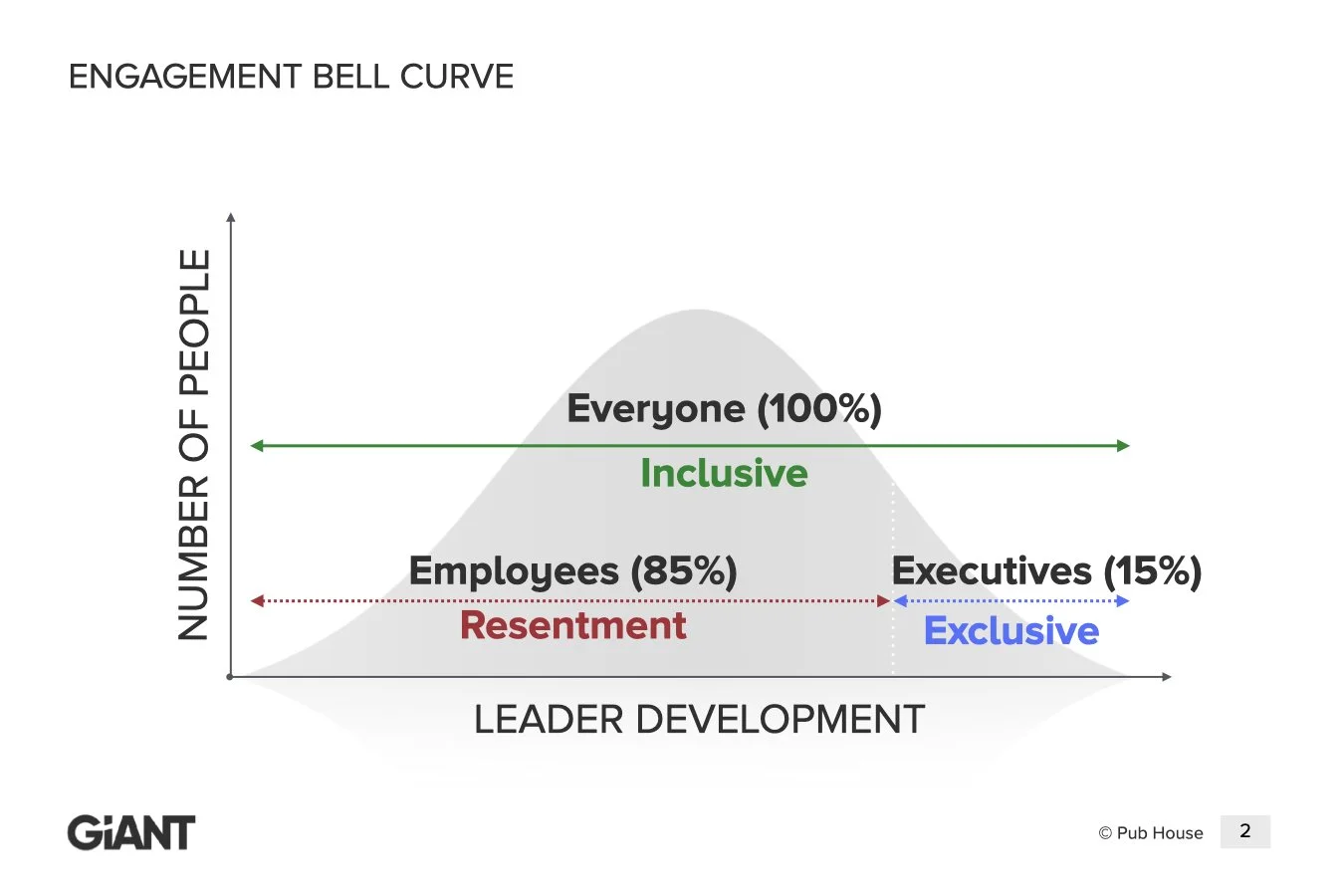
This is exactly what the Engagement Bell Curve helps us see.
The bell curve represents the distribution of people in an organization. Most traditional leadership development sits at the top of the curve. It’s expensive, exclusive and reserved for executives or senior leaders.
That approach unintentionally creates a divide. Those who attend get new language and tools. Those who don’t are left to interpret change without context. Over time, it creates resentment, skepticism, and a shared belief that leadership development is something done to them, not with them.
At Khaki Consulting, we take a different approach.
We use GiANT tools, paired with the 45 plus years of senior leadership experience we bring into every engagement. The tools are intentionally simple, scalable, and sustainable. They are designed to be used by anyone in the organization, regardless of role, education level, or title.
Front line employees, middle managers, and senior leaders all get access to the same language and the same tools. That shared vocabulary removes barriers, increases trust, and allows people to engage more honestly and objectively.
And practically speaking, this approach is far more efficient. Instead of spending tens of thousands of dollars sending a few leaders off site for a short burst of inspiration, organizations can invest in development that reaches everyone, lasts longer, and delivers a stronger return per person.
Why This Matters Now
We hear this all the time from our corporate clients.
When we come in and work with everyone at some level, people feel valued. They feel seen. They believe leadership actually cares about them.
We also hear the push back, especially from owners and senior leaders. Concerns that training junior employees will make them think they’re being promoted. Or that they don’t need leadership development yet. Or the fear that if you invest in them, they might leave.
Those fears are real. But they’re also costly.
The Result
Here’s the honest question.
Would you rather an employee eventually leave because you helped develop them as a leader? Or would you rather they quietly disengage for six months and then leave because they felt overlooked, undervalued, and stuck?
Exclusive development often leads to quiet quitting long before actual quitting.
Inclusive development builds trust, engagement, and ownership. Even when people do eventually move on, they leave better than they came, and they usually leave with respect for the organization that invested in them.
Take Action
Look at where your leadership development currently sits on the bell curve. Who gets access to tools, language, and growth? Who doesn’t? Be honest about the message that sends.
Have a conversation with us over coffee (on us). Let's talk through how to make leadership development more inclusive without overwhelming your team or your budget. We can help you build a shared leadership language that actually sticks.
Closing the Loop
My friend wasn’t wrong to be excited about that offsite. The problem wasn’t the training. It was the isolation.
Engagement grows when people are invited in, not when they’re asked to catch up.
When everyone has access to the same language and tools, people stop waiting it out and start leaning in. And that’s when leadership becomes something people experience, not just something a few people attend.